Concrete Repair vs. Replacement: Which Is Best for Your Shop?
Deciding between concrete repair vs. replacement depends on the damage's severity and root cause. If cracks exceed 1/4 inch, the slab is sinking unevenly, or water is ponding due to foundation failure, a full replacement is necessary. Minor surface scaling or narrow cracks can often be repaired effectively.
What do these cracks in my shop floor mean?
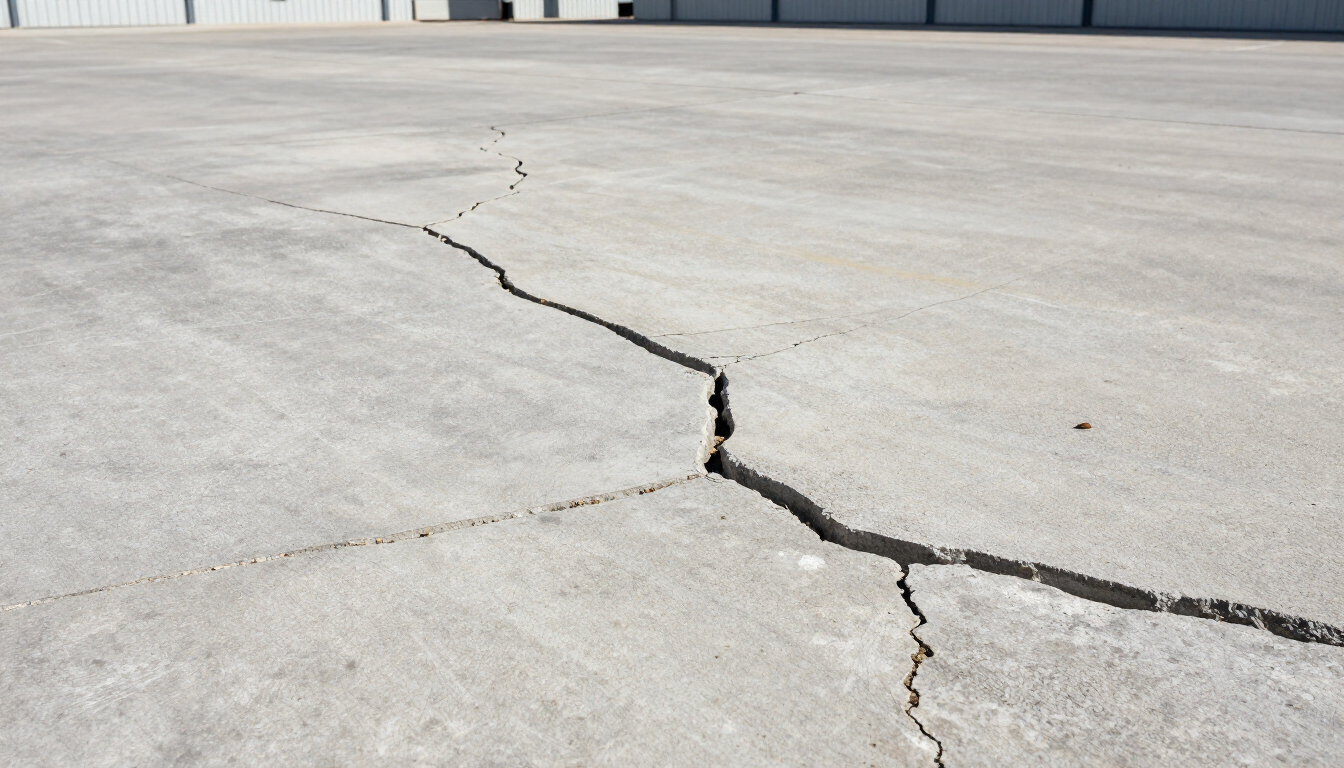
When you walk across your shop floor and notice a new line running through the concrete, it’s natural to feel a bit of concern. Cracks are the most common way concrete tells its story, but not every crack is a disaster. In our 25 years of experience at Shamrock Dirt & Forestry , we’ve seen that small hairline cracks are often just a sign of the concrete shrinking as it aged. These are usually cosmetic and don’t necessarily mean your floor is failing.
However, when cracks start to resemble a spider web or if one side of the crack is higher than the other, you’re looking at a structural issue. Deep, wide cracks often indicate that the weight of your equipment or vehicles is more than the slab can handle, or more likely, that the ground beneath has shifted. When the gap becomes wide enough to fit a coin or shows signs of crumbling at the edges, simple fillers won't solve the problem for long.
For many small business owners, an apron or loading area takes a lot of abuse. If you see "alligator cracking"—a series of small, interconnecting cracks that look like reptile skin—it usually means the surface has been overstressed. At this point, you have to decide if a patch is just a temporary Band-Aid on a deeper wound.
Why the ground underneath decides the outcome
One of the most important things we tell our clients is that concrete is only as good as the dirt it sits on. You can pour the most beautiful slab in Tennessee, but if the site preparation wasn't handled correctly, that concrete is going to fail. This is why Excavation & Dirt Work is such a critical first step in any project.
Concrete is heavy, but it isn't flexible. If the soil underneath is loose, contains too much organic matter, or wasn't compacted properly, it will eventually settle. This creates voids or empty pockets under your shop floor. Without the support of the earth, the concrete has to bridge that gap on its own. Eventually, the weight becomes too much, and the slab snaps. This is often why you see concrete repair vs. replacement debates—if the subgrade is the problem, repairing the top is a waste of money because it will just crack again in the same spot.
Proper Site Preparation & Finish Work ensures that the ground is stable and level. We look for a few specific things when evaluating a site:
- Uniform soil density across the entire footprint.
- Removal of soft spots or "spongy" earth.
- Adequate drainage to keep water from eroding the subgrade.
- A firm, level base that distributes weight evenly.
- Protection against seasonal soil expansion and contraction.
How can I tell if ponding water is a serious problem?
If you notice puddles staying on your concrete pad long after the rain has stopped, you have a ponding problem. For a shop or commercial property, standing water is more than just a nuisance; it’s a sign that the grade has failed. If water isn't moving away from your building, it's likely soaking into the ground right next to or under your foundation.
Over time, this constant moisture softens the soil. In the winter months common in Kentucky and Tennessee, that water freezes and expands, which can actually lift your concrete slabs. When it thaws, the slab drops back down, often landing in a slightly different position. This cycle, known as frost heave, is a leading cause of concrete failure. If the ponding is caused by a "low spot" in the middle of a slab, it usually indicates that the center has settled more than the edges.
When we evaluate ponding, we look at the surrounding landscape. Sometimes the issue isn't the concrete itself but the Property & Brush Clearing or grading around it. If the land doesn't slope away from the structure, water has nowhere to go. Fixing the concrete without fixing the drainage is a recipe for a repeat performance.
Signs it’s time for a full concrete replacement
Sometimes, repair is no longer a viable option. As a business owner, you want to make a smart investment, and sometimes that means starting over. Here are the clear indicators that your commercial concrete has reached the end of its life:
- The slab has sunk more than an inch or two in multiple areas.
- There are deep, full-depth cracks that run across the entire width.
- The surface is severely "spalling" or scaling away in large chunks.
- Water consistently drains toward your building foundation.
- The cost of multiple repairs is approaching the cost of a new pour.
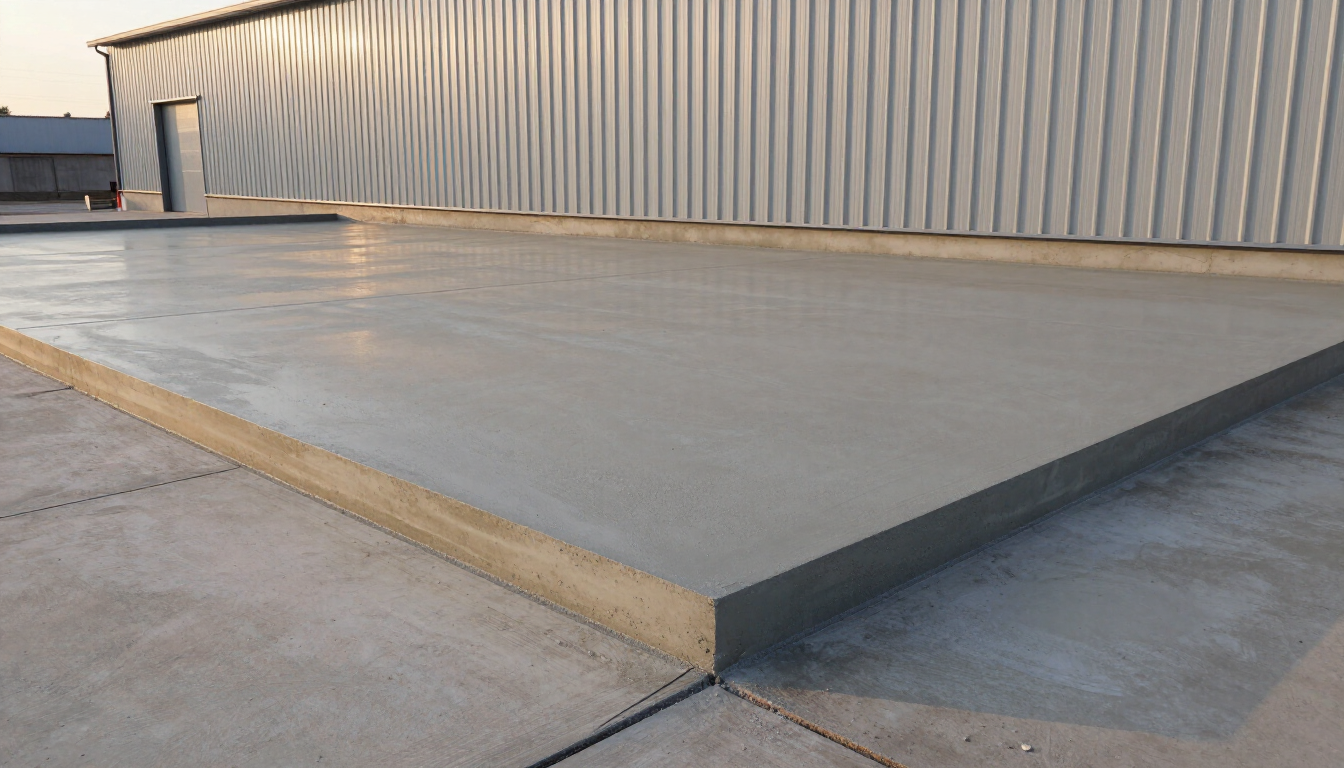
When we handle Concrete Services , we look at the big picture. If the majority of the pad is stable and the damage is localized, we might suggest a targeted fix. But if the structural integrity of the entire pad is compromised, a replacement allows us to get back down to the dirt, fix the subgrade issues, and ensure the new pad lasts for the next 25 years.
What causes concrete settling in Tennessee and Kentucky?
In our region, the soil can be quite tricky. We deal with a lot of clay and varying moisture levels that can wreak havoc on a shop floor or commercial apron. Settling happens when the soil can no longer support the weight of the slab. This often occurs because the soil was too wet when the concrete was poured, or it has dried out significantly since then, causing it to shrink.
Another common cause of settling is erosion. If a gutter or downspout is dumping water right at the corner of your shop, that water is likely washing away the fine particles of dirt under your concrete. You might not see it happening, but eventually, you'll notice a corner of your slab starting to dip or a crack forming exactly where the support has vanished. Identifying these environmental factors is a huge part of what we do during our site evaluation process to ensure any new work stays put.
Practical steps for evaluating your commercial property
Before you call in a contractor, you can do a preliminary check of your property yourself. This helps you describe the issues more accurately and understand the scope of the potential work. Take a walk around your shop or commercial pad after a heavy rain and keep an eye out for these specific signs.
- Identify where water is standing and for how long.
- Use a long straightedge to see how much a slab has dipped.
- Check the edges of the concrete to see if soil has washed away.
- Look for cracks that have shifted vertically (one side higher).
- Notice if heavy machinery seems to "rock" when driving over certain spots.
By taking these steps, you can help determine if you're dealing with surface-level wear or a deep-seated foundation issue. It’s always better to catch these things early before a small crack turns into a safety hazard for your employees or customers.
How do I choose between patching and a new pour?
Choosing between concrete repair vs. replacement usually comes down to the "one-third rule." If more than one-third of the slab is damaged, or if the cracks are structural rather than cosmetic, replacement is almost always the better long-term value. Patching is excellent for fixing a small trip hazard or filling a hole, but it doesn't add any structural strength to the floor.
If your shop floor needs to support heavy trucks or industrial equipment, a patch will likely fail under the pressure if the subgrade isn't solid. However, if the slab is mostly sound and you just have a few areas where the surface is chipping, a professional repair can extend the life of your concrete significantly. We always recommend looking at the root cause. If the subgrade is failing, a new pour—preceded by professional excavation —is the only way to ensure your business operations aren't interrupted by a crumbling floor in the future.
At Shamrock Dirt & Forestry, we believe in giving you the straight facts based on our decades of work in the field. We want your property to be a source of pride and a functional asset for your business, not a constant maintenance headache.
Summary of Concrete Repair vs. Replacement
Deciding whether to repair or replace your commercial concrete requires looking beneath the surface. While minor cracks and cosmetic wear can often be addressed with targeted repairs, structural issues like deep fissures, significant settling, or persistent ponding water usually signal a subgrade failure that only a full replacement can fix. By understanding the relationship between your concrete and the ground it sits on, you can make a choice that protects your investment and ensures a safe, durable workspace.
Core Takeaways:
- Assess crack width; anything over 1/4 inch often indicates structural trouble.
- Address ponding water immediately to prevent soil erosion and subgrade failure.
- Check for settling, as uneven slabs suggest the ground beneath was poorly prepared.
- Use the "one-third rule" to gauge if replacement is more cost-effective than repair.
- Always prioritize professional site preparation to ensure any new concrete lasts.