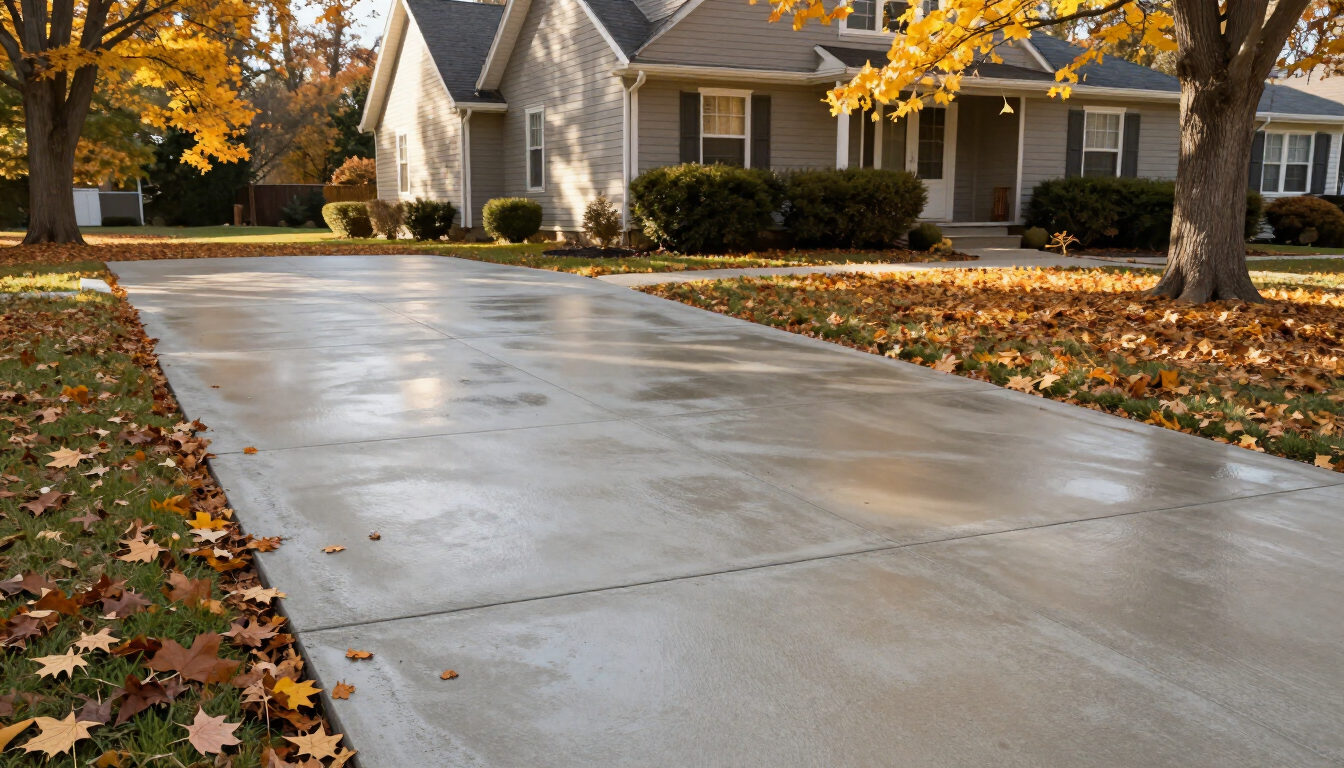
Plan Your Concrete Slab: Before You Pour
Planning a concrete slab requires assessing soil stability, drainage, and levelness before the mixer arrives. Proper site preparation—clearing brush, grading, and compacting a solid sub-base—is the most critical factor in preventing future cracks and structural failure in your new patio, driveway, or shop floor.
Why is site preparation important for concrete?
You might think that once the concrete truck pulls up and the wet cement starts flowing, the hard part is over. In reality, the success of your concrete project is determined long before the first cubic yard is poured. Site preparation is the foundation of every durable Concrete Service . Without it, even the highest quality concrete mix will eventually succumb to the elements, shifting soil, and heavy loads.
In our region of Tennessee and Kentucky, the soil can be quite fickle. We often deal with heavy clay or rocky terrain that reacts strongly to moisture changes. If you pour a slab directly onto unprepared ground, the natural expansion and contraction of the soil will cause the concrete to heave or sink. This leads to unsightly cracks and, eventually, a total structural failure. By investing in professional Site Preparation & Finish Work , you are ensuring that your investment lasts for decades rather than just a few seasons.
Key reasons to prioritize site preparation include:
- Preventing soil erosion under the slab
- Ensuring even weight distribution for heavy vehicles
- Managing water runoff to avoid pooling
- Creating a level surface for easy construction
- Reducing the risk of invasive roots damaging the pad
Assessing Your Soil and Land
Before you even call for a quote, take a walk around your property. Different parts of your land will offer different challenges. For a rural property owner, you might be looking at a beautiful spot for a shop, but if that spot sits at the bottom of a hill, you have a drainage problem waiting to happen. Understanding the "lay of the land" is the first step in any successful excavation project.
Soil quality is another major factor. In Western Tennessee, we see a lot of silt and clay. Clay holds onto water, which makes it expand. When it dries out, it shrinks. This movement is the enemy of a rigid concrete slab. A professional team will often recommend removing some of the native soil and replacing it with a compacted gravel or crushed stone base. This creates a stable "bridge" between the moving earth and your stationary slab. If you are planning a heavy shop slab for tractors or equipment, this base layer becomes even more vital to prevent the concrete from punching through the dirt.
How do you choose the right location for a slab?
Choosing the location for your new driveway or patio isn't just about the view; it's about physics and local regulations. You need to consider how accessible the site is for the concrete truck itself. Those trucks are incredibly heavy, and if your chosen site requires driving over a soft lawn or a weak culvert, you might end up with more property damage than you bargained for.

You also need to look for underground obstacles. Are there old stumps nearby? Roots from a large oak tree? Or perhaps an old Septic System that hasn't been mapped in years? Placing a heavy concrete slab over a septic tank or leach field is a recipe for a very expensive disaster.
Consider these location factors:
- Proximity to existing structures for drainage
- Access for heavy machinery and delivery trucks
- Sun exposure (which affects how fast concrete cures)
- Slope of the land and necessary retaining walls
- Local zoning setbacks from property lines
Property Clearing and Site Preparation
Once you’ve picked the perfect spot, it’s time to get dirty. Most rural lots aren't exactly "slab-ready." You likely have a mix of brush, saplings, and uneven mounds of earth. This is where Property & Brush Clearing comes into play. You cannot simply mow the grass and pour concrete over it. Organic material—like grass, roots, and leaves—will eventually rot away, leaving empty pockets under your slab. Those pockets lead to sinking and cracking.
We use specialized equipment to strip away the "overburden" (the top layer of organic soil). We dig down until we hit stable, inorganic subsoil. This process often uncovers rocks or hidden debris that must be hauled away. We often partner with our sister company, Shamrock Trucking & Hauling, to ensure that any debris or excess dirt is removed quickly, keeping your job site clean and ready for the next phase. Clearing the area also gives us a clear view of the topography, allowing us to plan the grading with surgical precision.
What drainage solutions should you consider?
In Tennessee and Kentucky, we get our fair share of rain. If that water has nowhere to go, it will find its way under your slab. This is called "subgrade saturation," and it is the leading cause of driveway failure. When the ground under the concrete stays wet, it turns into a soft slurry that can't support weight.
Proper drainage starts with the grade. The ground should always slope away from the slab at a rate of at least one inch for every foot for the first few feet. In some cases, we might need to install French drains or swales to redirect water around the site. If you are building a shop, you might also want to consider how the roof runoff will be handled. Downspouts should never dump water right at the edge of your concrete; instead, they should be piped away into a dedicated drainage area or a Pond if your property has one.
Common drainage strategies include:
- Perimeter swales to divert uphill runoff
- Buried PVC pipes for gutter downspouts
- Sloping the slab itself (usually 1/8 to 1/4 inch per foot)
- Using permeable gravel borders
- Installing catch basins in low-lying areas
How do you handle utilities and plumbing?
If your new shop or outbuilding needs water, electricity, or a bathroom, those lines must be trenched and installed before the concrete is even a thought. This is a critical part of Excavation & Dirt Work . Once the slab is poured, adding a bathroom becomes ten times more expensive because you have to saw through the concrete.

You also need to consider the depth of these lines. In our region, we have to bury water lines below the frost line to prevent freezing in the winter. If you are adding a shop to a property that already has a home, we may need to tie into your existing Septic System Installation & Repair setup. Coordinating these utilities requires a team that understands both the dirt work and the technical requirements of the build. We ensure that every pipe is bedded in sand and protected from the weight of the coming slab.
Final Excavation and Dirt Work
The final step before the forms go up is the "sub-base compaction." This isn't just about making the dirt flat; it's about making it dense. We use vibratory rollers and plate compactors to squeeze the air out of the soil and gravel. If you can push a screwdriver into the ground with your hand, it isn't compacted enough for a concrete pour.
During this phase, we also do the "finish work." This involves fine-tuning the elevations so that the concrete thickness is uniform. If one side of your slab is 4 inches thick and the other is 8 inches because the ground wasn't level, the slab will dry at different rates, leading to internal stress and cracks. A perfectly level, rock-hard sub-base is what separates a professional job from a DIY headache.
Essential Takeaways for Your Concrete Project
Planning a concrete project on a rural property is a significant investment that adds value and utility to your land. By following a structured approach to site preparation, you ensure that your patio, driveway, or shop slab stands the test of time.
- Prioritize Drainage : Never let water pool against or under your concrete.
- Clear the Organic Material : Remove all grass and roots to prevent future sinking.
- Compaction is Key : Use professional equipment to create a dense, unyielding base.
- Plan for Utilities : Install all plumbing and electrical lines before the pour.
- Hire Local Experts : Work with a team that understands Tennessee and Kentucky soil conditions.
Ready to get started on your next project? Whether you need a simple pad for a shed or a massive driveway for your farm, Shamrock Dirt & Forestry has the experience and equipment to get the job right the first time. Contact us today to schedule a site evaluation and request a quote for your land development needs.